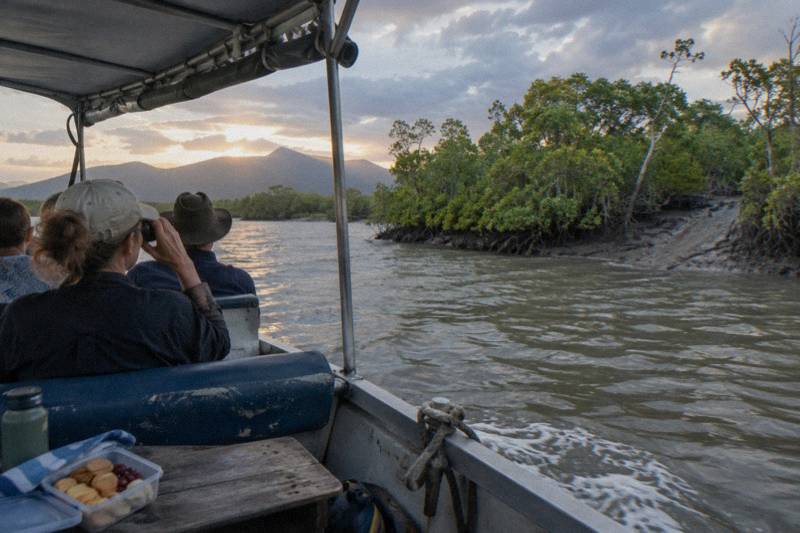
Will We See Crocodiles On A Dickson Inlet Evening Cruise?
Crocodile sightings on a Dickson Inlet evening cruise: the operator's own claim, the Queensland Government safety rules, the best months, and how the inlet boats compare.
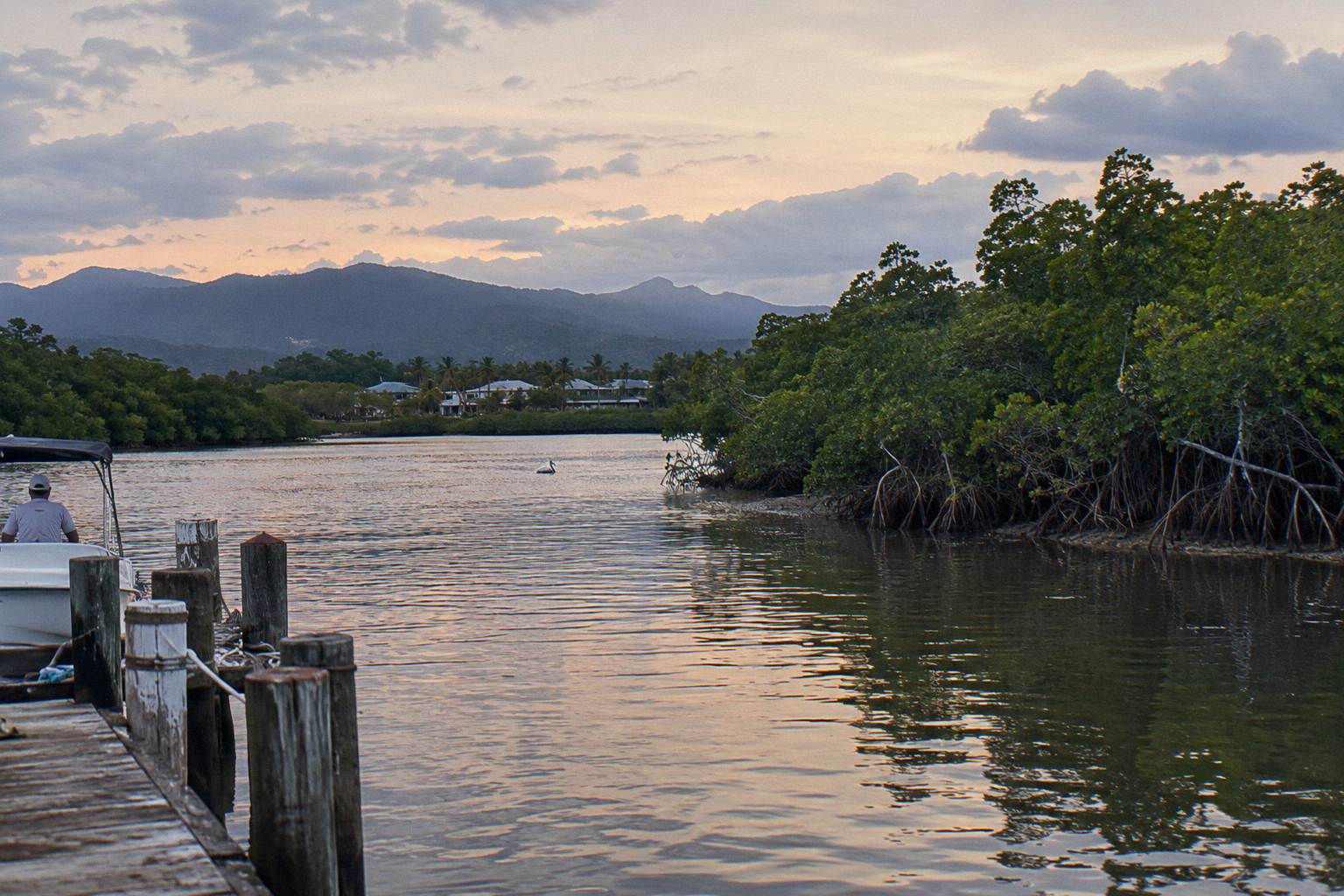
Very likely, but no boat can promise a crocodile, and any operator that does is overstepping. The Lady Douglas operator says crocodiles are normally seen on over 90 percent of its trips, especially in the dry season from May to November, which is an operator claim rather than a guarantee. The Queensland Government's Be Crocwise advice confirms estuarine crocodiles live throughout this stretch of coast, so the animals are genuinely there in Dickson Inlet.
That 90 percent figure deserves a careful read before you build an evening around it. It comes from the operator itself, not from an independent count, and it covers all of the boat's cruises, morning through sunset, across the whole year. A single evening departure in February is a different proposition from an afternoon run in July, because crocodiles are cold blooded and their basking habits shift with the seasons. Treat the number as a strong signal, not a contract.
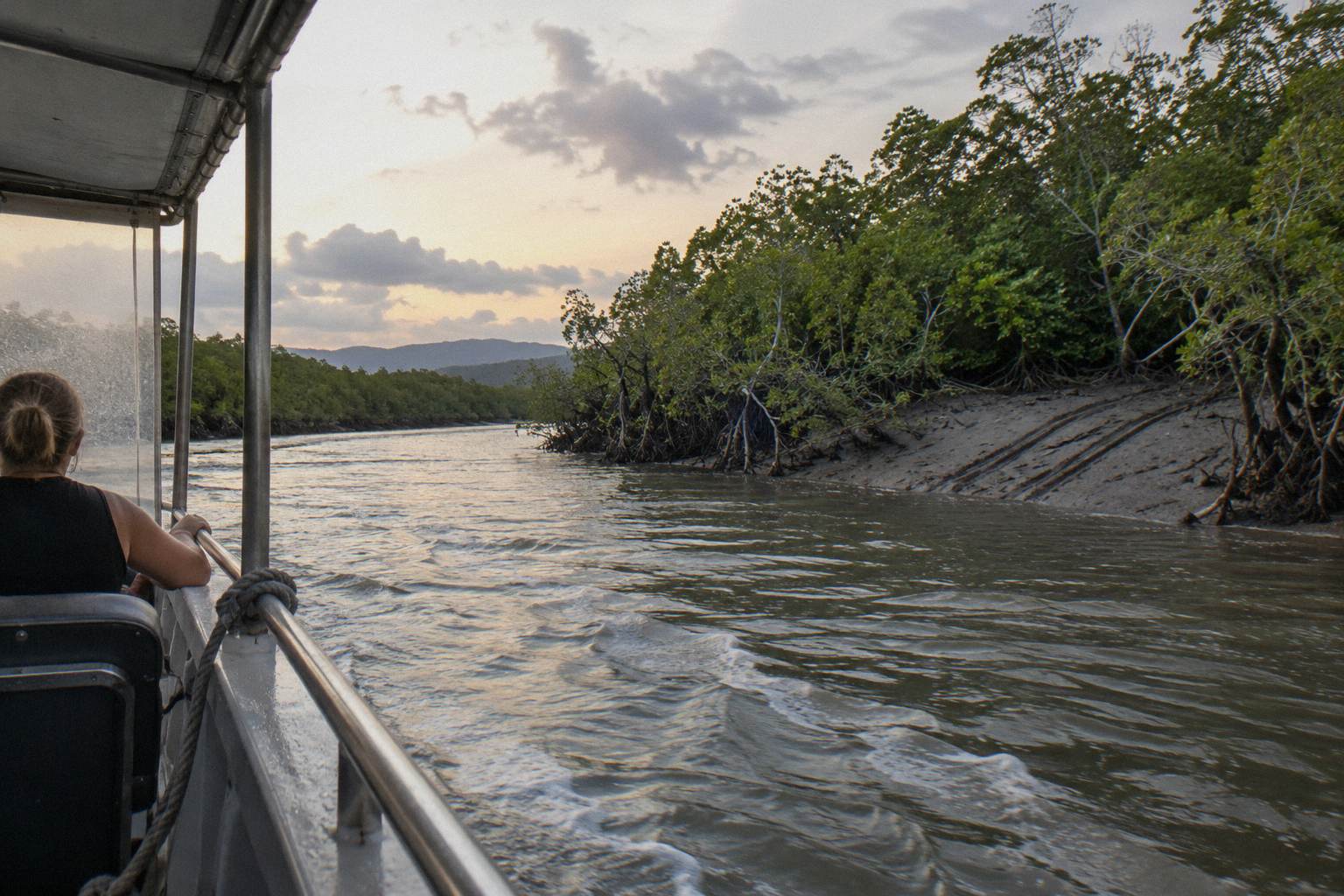
The inlet itself is good crocodile country by any standard. Maritime Safety Queensland describes the Port of Port Douglas as a small natural harbour behind Island Point within the border of Dickson Inlet, and the Lady Douglas route runs through the waterfront and harbour, several kilometres up the mangrove channels and to the inlet entrance. Tidal mangrove channels of exactly that kind are where the Queensland Government says estuarine crocodiles are most common.
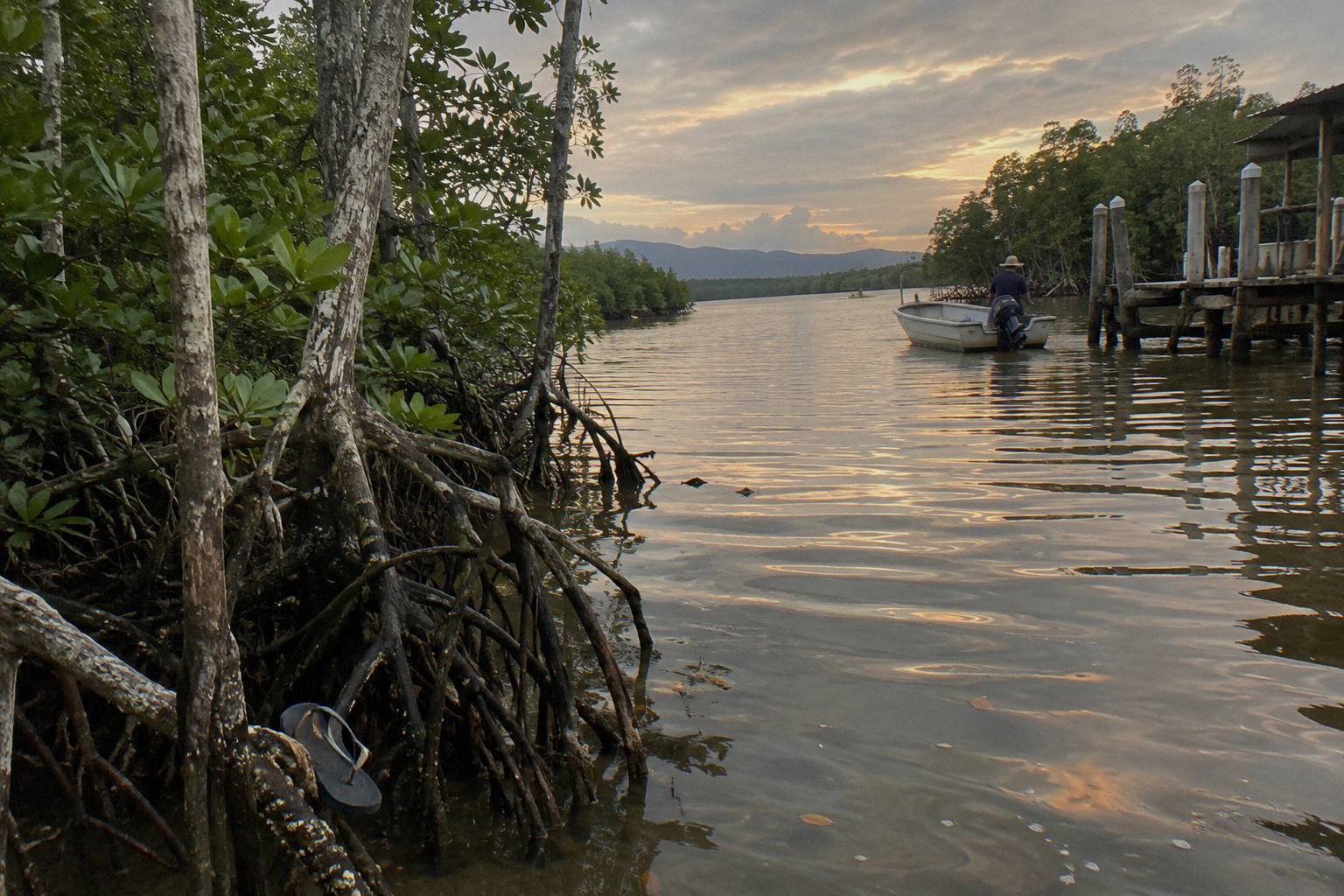
There is a second, quieter reason the odds are decent: the boat you would take is slow and repetitive. Lady Douglas runs four scheduled cruises a day through the same channels, and a crew that passes the same mudbanks daily learns where the resident animals sit. The commentary on board covers mangroves, crocodiles and local history, which tells you the crew treats spotting as part of the job rather than a lucky extra. If you are weighing an inlet cruise against a catamaran sail out to open water, the mangroves are where the crocodiles are.
If the crocodile question is the reason you are booking, the choice narrows quickly. Only one evening boat in Port Douglas works the inlet channels deliberately; the others cross the inlet briefly on their way to the Coral Sea. Our guide to choosing an evening boat in Port Douglas breaks the decision down by group type, and the wider Port Douglas Sunset Cruises coverage follows each boat in detail.
Which Boat Actually Looks For Crocodiles?
The Lady Douglas river cruise is the only one of the Port Douglas evening trips built around the inlet's mangrove channels, and the only one whose commentary covers crocodiles as a core topic. It is a river cruise with a sunset departure, rated 4.6 from 571 reviews, from A$48 per person with one complimentary beverage and a snack box included. The sailing trips use the inlet as a doorway, not a destination.
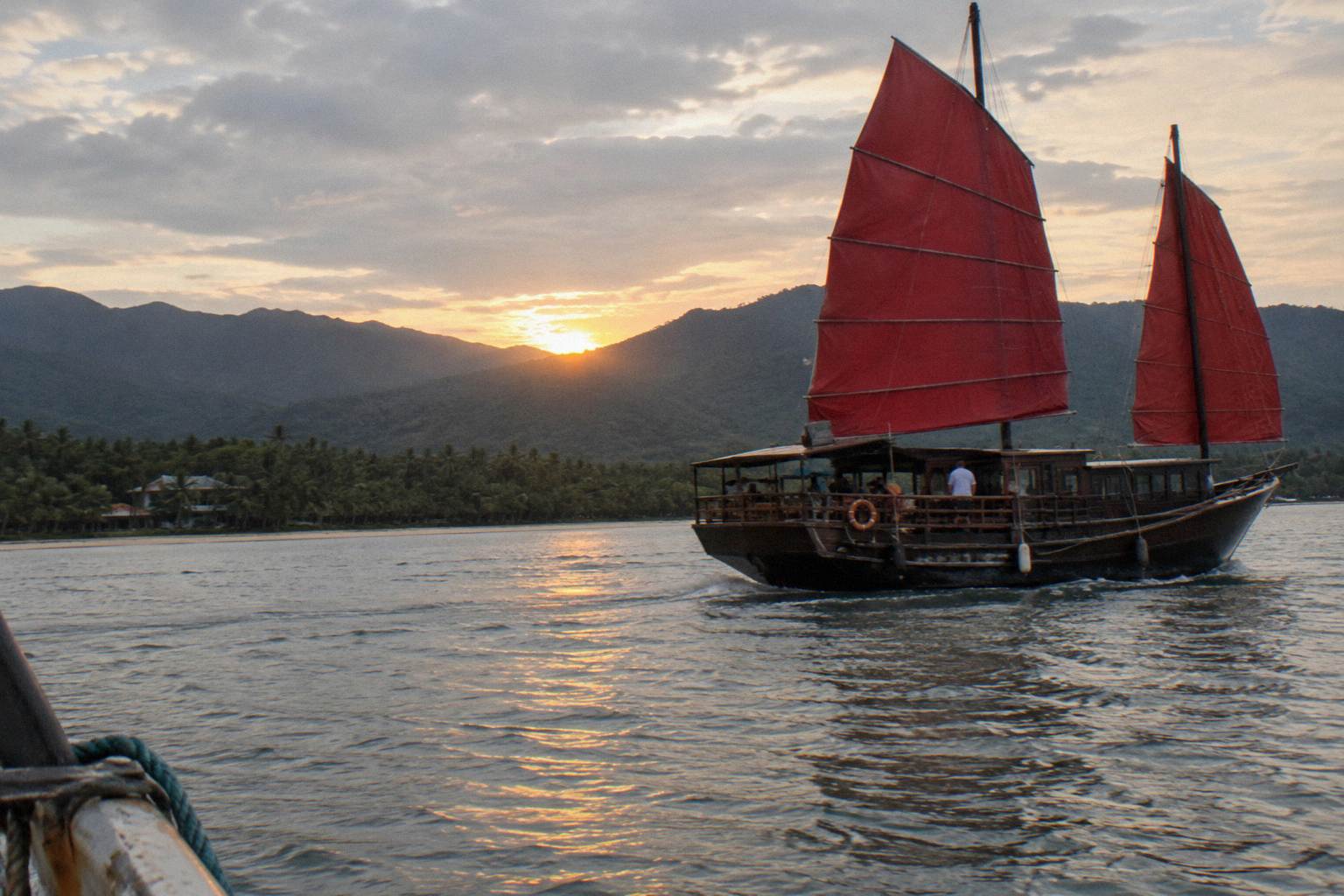
The distinction matters more than it sounds. Shaolin, the Chinese junk, sails from the marina along Dickson Inlet, past the waterfront and out into the Coral Sea, so you cross crocodile habitat for a few minutes at each end. Sailaway's catamarans head for open water and the Daintree mountain views. Neither carries crocodile commentary, and neither slows down in the channels, because that is not the product. Both are fine evenings, but they are not crocodile trips.
Here is how the three inlet-adjacent evenings compare. All prices are per person in Australian dollars, and all four trips board at Crystalbrook Superyacht Marina on Wharf Street.
| Trip | Route | Crocodile angle | From | Rating |
|---|---|---|---|---|
| Lady Douglas river cruise | Waterfront, harbour, several kilometres of mangrove channels, inlet entrance | Commentary on mangroves, crocodiles and local history | A$48 | 4.6 from 571 reviews |
| Shaolin junk sunset cruise | Along Dickson Inlet, past the waterfront, out into the Coral Sea | Passes the inlet mouth, no spotting commentary | A$71 | not published |
| Sailaway catamaran sunset sail | Out of the inlet into open water, Daintree mountain views | None; open-water sailing trip | A$105 | 4.6 from 391 reviews |
The Lady Douglas boat itself suits the job: a calm-water vessel with covered seating over the entire back deck and a toilet on board, which matters on a 1.5 hour run with children. Lady Douglas lists free cancellation up to 24 hours before the start. Shaolin carries a similar cancellation window and includes yum cha style canapes and a beverage, with a bar on board taking EFTPOS or cash.
What Time Of Year Gives The Best Odds?
The dry season, roughly May to November, is when the Lady Douglas operator says crocodile sightings are most reliable, and that claim lines up with how the animals behave. Bureau of Meteorology averages for Port Douglas put July to September as the driest months, 23 to 32 mm of rain, against more than 395 mm in each of January, February and March. Cool, dry, sunny weather brings crocodiles out of the water to bask.
The logic is thermal rather than mysterious. A crocodile in the dry-season tropics hauls onto a warm mudbank through the middle of the day and often stays there as the light drops, because the water is cooler than the air. In the wet season, warm water and heavy rain remove the reason to bask, and higher inlet levels let the animals scatter into flooded mangroves. You can still see crocodiles between January and March, plenty of people do, but the odds tilt away from you.
| Month | Mean max (C) | Mean rain (mm) | Rain days 1 mm+ |
|---|---|---|---|
| January | 30.3 | 395.8 | 13.8 |
| February | 30.1 | 422.0 | 14.2 |
| March | 29.5 | 429.4 | 14.4 |
| July | 24.6 | 26.4 | 4.2 |
| August | 25.3 | 23.3 | 4.0 |
| September | 26.7 | 32.1 | 4.4 |
The numbers come from the Bureau of Meteorology's long-term averages for the Port Douglas Warner Street station, and the full monthly breakdown sits in our sunset times by month guide. One planning note follows from them: if your trip falls in the wet season, the covered back deck on Lady Douglas and the sheltered saloon on Shaolin are worth weighing, because showers are common January to March and Shaolin hands out umbrellas on rainy days.
Timing within the day matters too, though less than season. The Lady Douglas sunset departure runs 4:30pm to 6:00pm, and the operator says cruise times depend on seasonal demand. Late afternoon light in the dry season is soft and low, which makes mudbanks easy to scan, and crocodiles that basked all day have often not yet slipped back into the channel. No operator publishes a sighting breakdown by departure, so treat any hour-by-hour claim you read elsewhere with suspicion.
What Time Of Day Works For Spotting?
Late afternoon, which is exactly what the sunset departure gives you, is the strongest slot on the daily clock. Crocodiles bask through the warm middle of the day and stay on the banks as the heat eases, so a 4:30pm start catches them before they slide back into the water. The Lady Douglas sunset cruise, 4:30pm to 6:00pm, is scheduled into that window deliberately.
The four daily departures tell their own story. Lady Douglas runs a morning cruise 10:30 to 12:00, a midday cruise 12:30 to 14:00, an afternoon cruise 14:30 to 16:00 and the sunset cruise 4:30pm to 6:00pm. Any of them can produce a crocodile, and the morning run has the advantage of animals warming up after a cool night. But the sunset departure adds the inlet at its most photogenic, the mangroves going dark against the sky, and it pairs a wildlife outing with an evening on the water.
| Departure | Time | Character |
|---|---|---|
| Morning | 10:30am to 12:00pm | Crocodiles warming up after a cool night |
| Midday | 12:30pm to 2:00pm | Peak basking heat, hard light for photos |
| Afternoon | 2:30pm to 4:00pm | Banks still occupied, light softening |
| Sunset | 4:30pm to 6:00pm | Low golden light, inlet at its quietest |
If you want the full picture on how the day breaks down, our piece on day or evening river cruises in Port Douglas compares all four slots. The short version for a crocodile-focused visitor: the sunset departure is the one that combines a reasonable chance of animals with the best light and the only evening atmosphere on the schedule.
The sunset cruise also solves a practical problem for anyone staying in Port Douglas itself. It ends at 6:00pm, in time for dinner in town, and the last shared buses south to Cairns run about 5:00pm to 6:00pm anyway, so an evening on the inlet only really works if you are staying locally or have a late transfer arranged. Our getting to the marina guide covers the transport detail.
What Else Will You See On The Inlet?
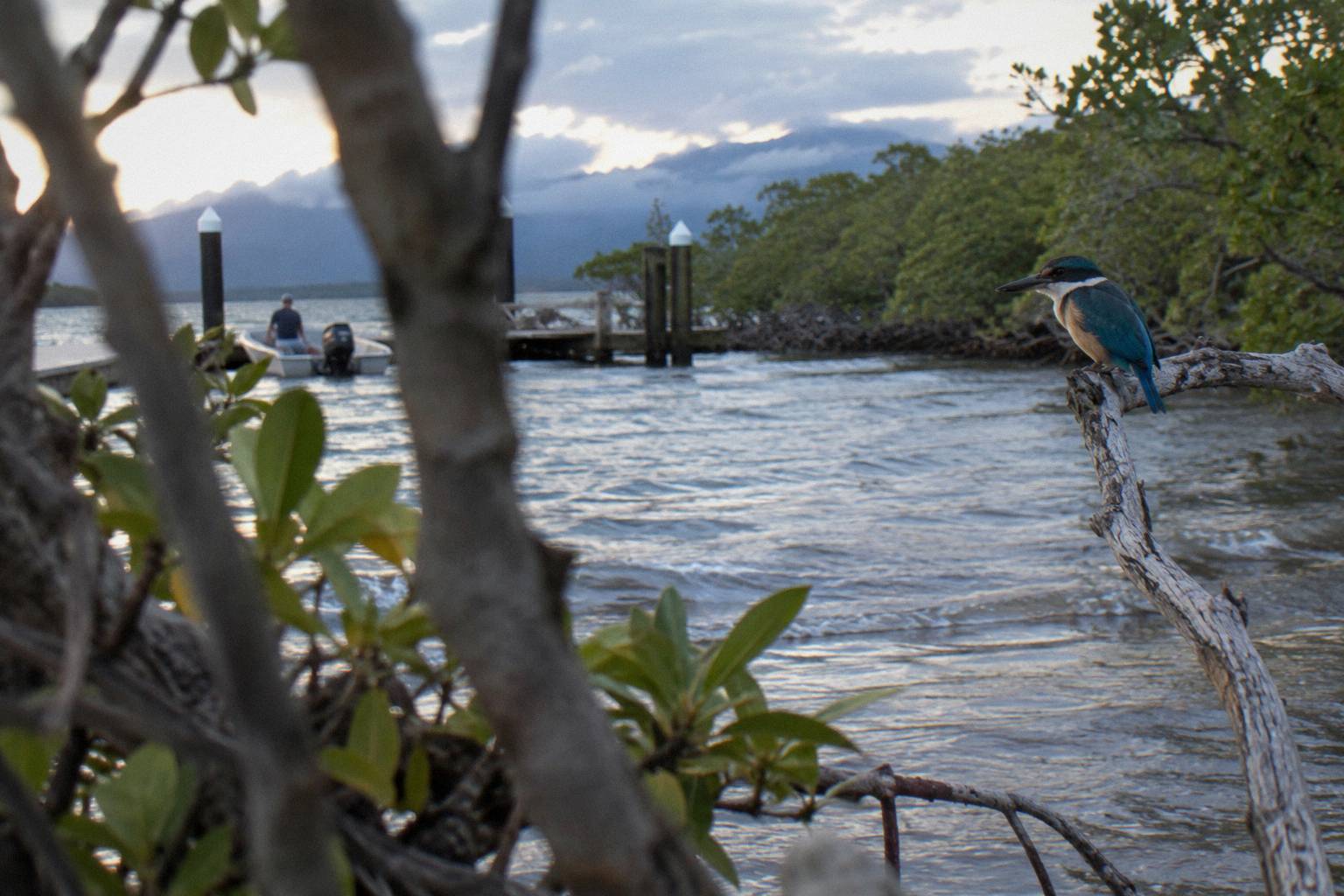
Crocodiles share Dickson Inlet with a long bird list, and the Lady Douglas operator names brahminy kites, ospreys, white-bellied sea eagles, mangrove herons, whimbrels, rainbow bee-eaters, sunbirds and kingfishers among the regulars. The commentary on board weaves the birds together with the mangroves and the town's history, so the cruise has substance even on an evening when every crocodile stays hidden.
That breadth is worth pausing on, because it changes what you are buying. A trip sold purely on crocodiles lives or dies by one sighting; a trip through a mangrove ecosystem with a bird list, a history commentary and a sunset finish pays off in more currencies. The mangrove channels themselves are the draw for many return passengers: several kilometres of narrow water where the town disappears behind the trees and the noise drops away.
The bird list splits neatly by where to watch. The raptors, brahminy kites, ospreys and white-bellied sea eagles, patrol the open channels at low tide and are often the first thing pointed out. Along the mudbank edges, mangrove herons and whimbrels work the shallows on foot, still enough to pass as driftwood. In the canopy, rainbow bee-eaters, sunbirds and kingfishers supply the colour, flashing between the mangrove stems as the boat slides past.
The Queensland Government's wildlife range maps cover the whole coast, but the bird detail is the operator's own. One boundary to hold firmly: no whale, dolphin, turtle or dugong claim exists for any of these trips, and any page implying otherwise is filling silence with a promise. The inlet is crocodile and bird country, and the open-water trips are sailing experiences with mountain views. For what the catamaran side offers, see our evening boat reviews roundup.
Families get a version of the same answer. Lady Douglas takes all ages, it has infant seats and laps for infants, and there are activity colouring sheets for children on board, which lands well on a boat where the star animal may or may not appear. Our sunset sail with kids guide runs through the age rules for every evening boat, including Indigo's minimum age of 10.
How Do You Stay Safe Around Inlet Crocodiles?
Follow the Queensland Government's Be Crocwise rules and the risk stays low: keep arms and legs inside the boat, never bring a vessel within 10 metres of a crocodile, and treat every waterway in the region as crocodile habitat. No waterway in the estuarine crocodile's range is crocodile free, and Dickson Inlet is never safe to swim or paddle in. A cruise boat with a professional crew is the right way to see the inlet.
The government's advice contains one point that surprises visitors: the absence of a warning sign means nothing. Crocodiles can stay underwater and out of sight for hours, so a calm, empty-looking channel is not evidence of an empty channel. The animals can be found in any waterway and in the sea throughout the region, the range running from near Gladstone north to the Torres Strait. None of this makes a boat trip hazardous; it makes swimming, paddleboarding and kayak fishing in the inlet genuinely bad ideas.
| Be Crocwise rule for boaters | What it means on an inlet cruise |
|---|---|
| Keep arms and legs inside the boat | No dangling hands over the rail for a photo |
| Stay 10 metres from any crocodile | The skipper manages distance; passengers do not lean out to close it |
| Avoid kayaks and paddleboards | Small craft are the risk category, not cruise boats |
| Treat no sign as no crocodiles | Do not assume a calm bank is an empty one |
Timing adds a seasonal note the same pages make clear: nesting runs December to April, and Be Crocwise treats September to April as the breeding season, when adult crocodiles can be more territorial. A scheduled cruise with a local crew reads the animals and the banks daily, which is precisely why the guided option beats any self-arranged encounter. The Queensland Government's Be Crocwise guidance and its boating tips page carry the full rules, and the Lady Douglas wildlife page lists the birds and animals its crews record.
Should You Take The Kids On A Crocodile Cruise?
Yes on Lady Douglas, with the ordinary caveats. It takes all ages, runs calm water with covered seating across the whole back deck, carries a toilet, and keeps children occupied with colouring sheets if the crocodiles stay down. By contrast Shaolin suits children 4 and up best, its operator says, because the junk is open with little hand railing, and Indigo sets a minimum age of 10.
The comparison is really about railings and water, not about crocodiles. On an inlet boat with high covered seating, a child watching for eyes on a mudbank is contained and dry. On an open sailing vessel, the same child is moving around a deck in the wind, which is a different supervision job. Sailaway takes all ages but permits no prams or strollers on board, so toddlers ride in arms for 1.5 hours. Our what to pack guide covers the operator-listed extras, including Sailaway's free ginger tablets, the only seasickness remedy any operator publishes.
Price sits behind the decision too, in Australian dollars per person. Lady Douglas starts from A$48 with a drink and snack box included; Shaolin starts from A$71 with yum cha style canapes; Sailaway starts from A$105 with hot and cold canapes and a welcome drink. The full breakdown, including the sunset sail prices guide context, shows how the three tiers divide up. Never print a child fare in your planning: none is published, so ask the operator when booking.
One last pairing worth knowing: because Shaolin and Lady Douglas are sister vessels under the same ownership, the operator offers a 10 percent discount for booking both. That turns a crocodile evening into a two-night inlet-and-junk combination, with the same marina boarding point at 44 Wharf Street for each. The crocodile cruise is the one you book for the animals; the junk is the one you book for the boat itself.
Common Questions About Crocodiles On The Inlet
Will We See Crocodiles On A Dickson Inlet Evening Cruise?
Probably, but never certainly. The Lady Douglas operator says crocodiles are normally seen on over 90 percent of its trips, especially in the dry season from May to November, and the Queensland Government confirms the inlet sits inside estuarine crocodile habitat. Treat the figure as an operator claim, not a guarantee, and book the sunset departure 4:30pm to 6:00pm for the best light and timing.
Are Crocodiles Dangerous To A Cruise Boat?
A scheduled cruise with a professional crew is the safe way to see the inlet. The Queensland Government's Be Crocwise rules apply to people in or on the water: keep arms and legs inside the boat, never come within 10 metres of a crocodile, and avoid kayaks and paddleboards. Swimming in Dickson Inlet is never safe, but a cruise boat is not in the risk category.
What Month Is Best For Seeing Crocodiles In Port Douglas?
The dry season, May to November, is when the Lady Douglas operator says sightings are most reliable. Bureau of Meteorology averages put July to September as the driest months, 23 to 32 mm of rain, while January to March each average more than 395 mm. Cool dry weather brings crocodiles onto the banks to bask.
Do The Other Evening Boats Look For Crocodiles Too?
No. Shaolin crosses Dickson Inlet on its way out to the Coral Sea and carries no spotting commentary, and the Sailaway catamarans head straight for open water with Daintree mountain views. Lady Douglas is the evening trip whose route and commentary are built around the mangrove channels and their wildlife.
What Else Will We See If No Crocodile Appears?
The operator lists brahminy kites, ospreys, white-bellied sea eagles, mangrove herons, whimbrels, rainbow bee-eaters, sunbirds and kingfishers on the route, with commentary covering mangroves, crocodiles and local history. The sunset departure 4:30pm to 6:00pm adds low light over several kilometres of mangrove channels and a drink and snack box on board.
Is The Crocodile Cruise Suitable For Children?
Lady Douglas takes all ages, with covered seating over the entire back deck, a toilet on board, infant seats available and colouring sheets for children. Shaolin suits children 4 and up best, its operator says, because the junk is open with little hand railing, and Indigo sets a minimum age of 10.