
Can You See The Sunset In Port Douglas?
Yes, and the hour matters: a month-by-month breakdown of Port Douglas sunset times, which evening boats are on the water as the sun goes down, and how the wet and dry seasons change the sky.
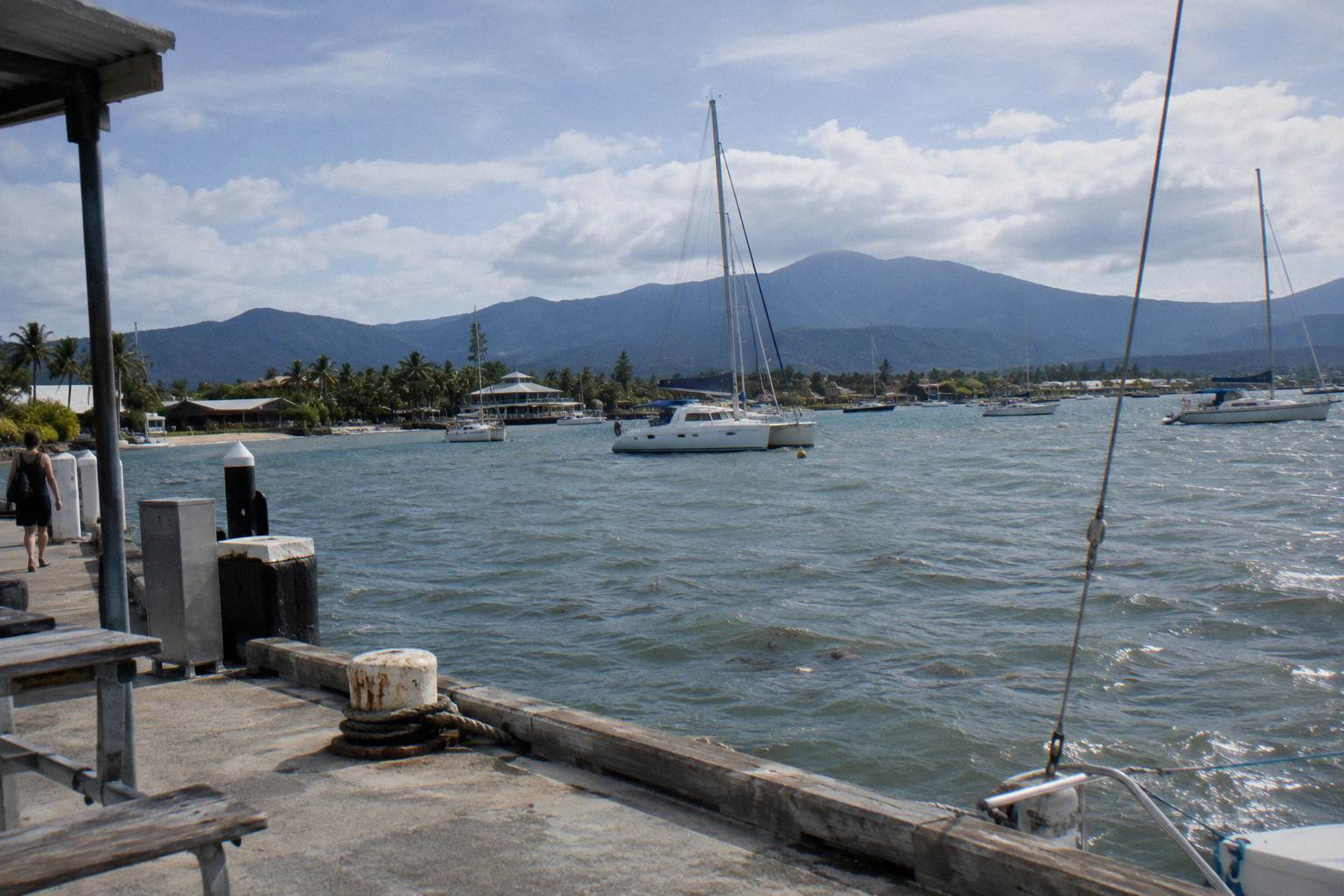
Yes, the sun sets in Port Douglas every evening of the year, though it drops behind the western mountains rather than over the sea. Using NOAA solar calculations for the marina, sunset falls around 5:53pm in mid-June and 6:57pm in mid-January. Because the town faces east over the Coral Sea, the colour spreads across the sky and water in front of you, with May to August sunsets occurring while evening boats are still out.
That last point is the one most visitors miss. The two boats that publish a fixed 5:00pm to 6:30pm schedule, the Sailaway catamarans and the Shaolin Chinese junk, are tied to one departure time all year, while the sun keeps moving through a full hour and four minutes of swing across the calendar. Book the same trip in July and in December and you get two genuinely different evenings: in July the sun goes down somewhere between mid-cruise and the final third; in December it is still well above the horizon when the boat comes back alongside.
The month-by-month numbers, and what each one means for the boats, are laid out below. The figures are a calculation, not an official tide-and-time table, and no boat time should be read into them: they describe the sky, not the schedule. Colour is a weather matter and nobody can promise it, in any month, from any vessel or from the shore. What the numbers do settle is the arithmetic of which departure catches the western sky and which one catches the afterglow.
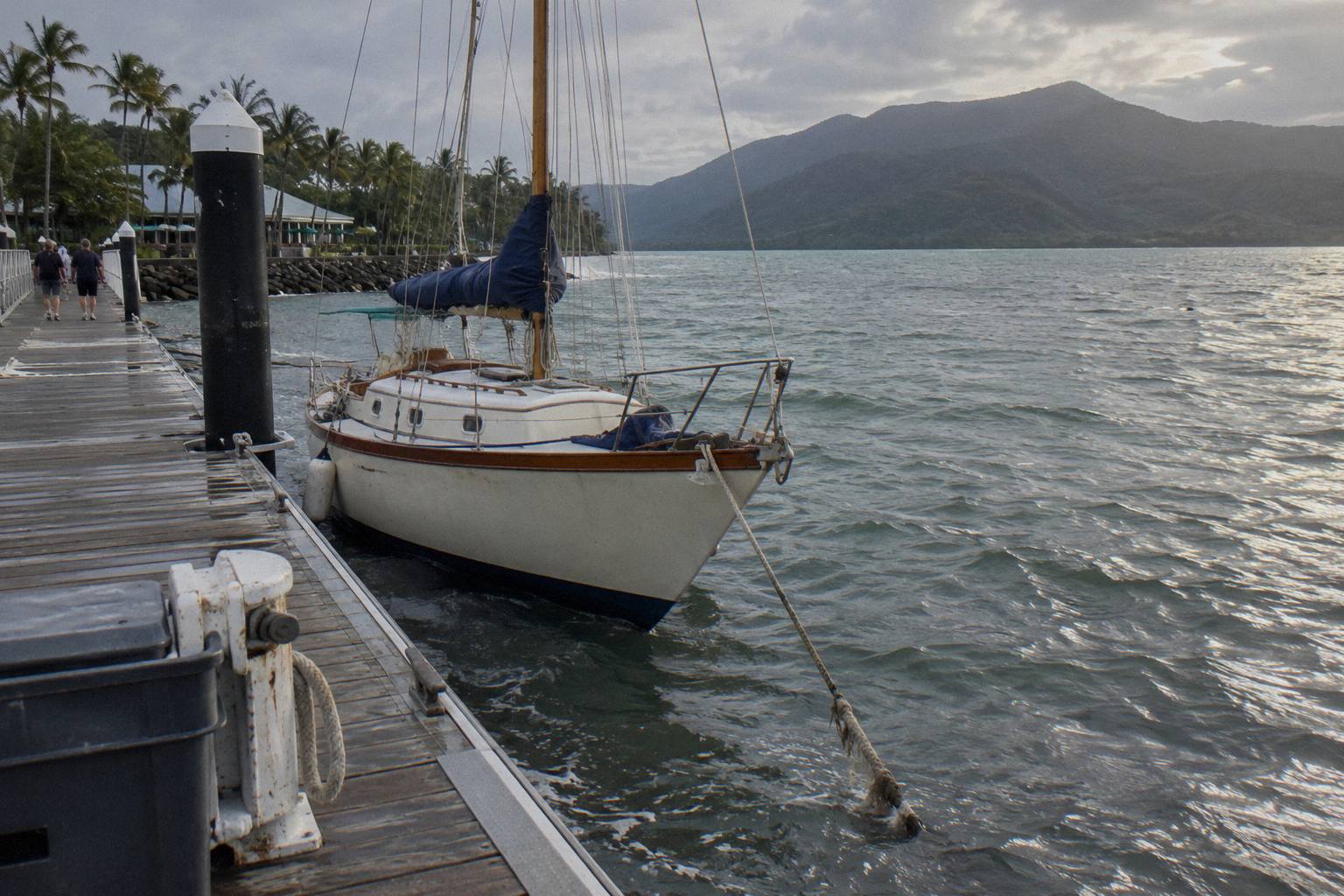
The choice underneath the question is usually between watching from the shore and watching from the water. From the water you get the whole panorama: the mountains the sun sets behind, the coastline running south, and the sea going gold in front of you. Sailaway's own page points to views of the Daintree mountains; Indigo's page puts the sunset over the Mossman Gorge mountains; the Shaolin route takes in the local mountains, the coastline, the surrounding islands and Four Mile Beach. Each boat frames the same western sky differently, which is worth knowing before you pick one.
When The Sun Sets, Month By Month
Sunset times at Port Douglas shift steadily through the year: the sun drops below the horizon near 6:57pm in mid-January, close to 5:53pm in mid-June, and moves between those marks across the months. Daylight lasts about 12.6 hours in February versus 11.2 in June, so the same 5pm departure catches a different stage of the evening sky each season.
Here is the full table. Read it against the departure time of whichever boat you are considering and you will know, roughly, where in the trip the sky turns.
| Month | Calculated sunset (about) | Daylight hours (about) | Where a 5:00pm to 6:30pm trip sits |
|---|---|---|---|
| January | 6:57pm | 13.0 | Sun still up at the end |
| February | 6:52pm | 12.6 | Sun still up at the end |
| March | 6:34pm | 12.2 | Sets near the end |
| April | 6:11pm | 11.7 | Sets in the final third |
| May | 5:55pm | 11.4 | Sets in the final third |
| June | 5:53pm | 11.2 | Sets between mid-cruise and the final third |
| July | 6:01pm | 11.2 | Sets in the final third |
| August | 6:09pm | 11.5 | Sets in the final third |
| September | 6:13pm | 12.0 | Sets in the final third |
| October | 6:17pm | 12.4 | Sets in the final third |
| November | 6:29pm | 12.9 | Sets near the end |
| December | 6:46pm | 13.1 | Sun still up at the end |
Two seasons fall out of the table. From November to March the sun sets somewhere between about 6:29pm and about 6:57pm, which is at or after the end of a 6:30pm return: the brightest colour can come as the boat is docking or after you have stepped ashore. From May to August it sets between about 5:53pm and about 6:09pm, comfortably inside the trip, which is why winter evenings in Port Douglas suit the fixed-schedule boats so well.
The shoulder months are the subtle ones. April and September sit in the final third of a 5pm departure, October pushes later, and March pushes later still. If your whole reason for being on the water is the western sky, the table says the middle of the year is the safe booking and the summer months are a bet on the afterglow.
One more caution: these are solar calculations, and colour is not a solar calculation. Cloud, haze and rain decide whether the evening delivers anything at all, and no operator promises otherwise. For more on the sky's timing across the year, the month-by-month Port Douglas sunset times guide works through the same numbers in more detail.
Where The Evening Boats Are When The Sun Goes Down
At sunset, four boats are out on the water: Sailaway departs at 5:00pm and returns at 6:30pm, Shaolin runs from 5pm to 6:30pm with boarding 15 minutes earlier, Lady Douglas sails from 4:30pm to 6:00pm, and Indigo leaves between 4:00pm and 4:30pm. Only Indigo adjusts its timing to follow the sun across the year, while the others keep a fixed schedule as the sky shifts by about an hour.
That single difference is the most useful thing to understand when matching a boat to the sunset table above. Indigo's departures are published as 4:30pm from November to February, 4:15pm in March, April, September and October, and 4:00pm from May to August: in every season the trip finishes around two hours after it starts, which keeps the western sky inside the sail. A May start at 4:00pm wraps up near 6:00pm, just past the calculated 5:55pm sunset; a January start at 4:30pm finishes near 6:30pm, right as the sun reaches about 6:57pm.
The fixed-schedule boats make a different trade. A 5:00pm to 6:30pm window holds the winter sunset between mid-cruise and the final third, while in summer the boat is back at the marina around sunset or just before it, up to about half an hour early in January. An evening on the water in December still gives a long, low light over the sea, and the colour may come as the boat returns or just after. It is simply a different product in different months.
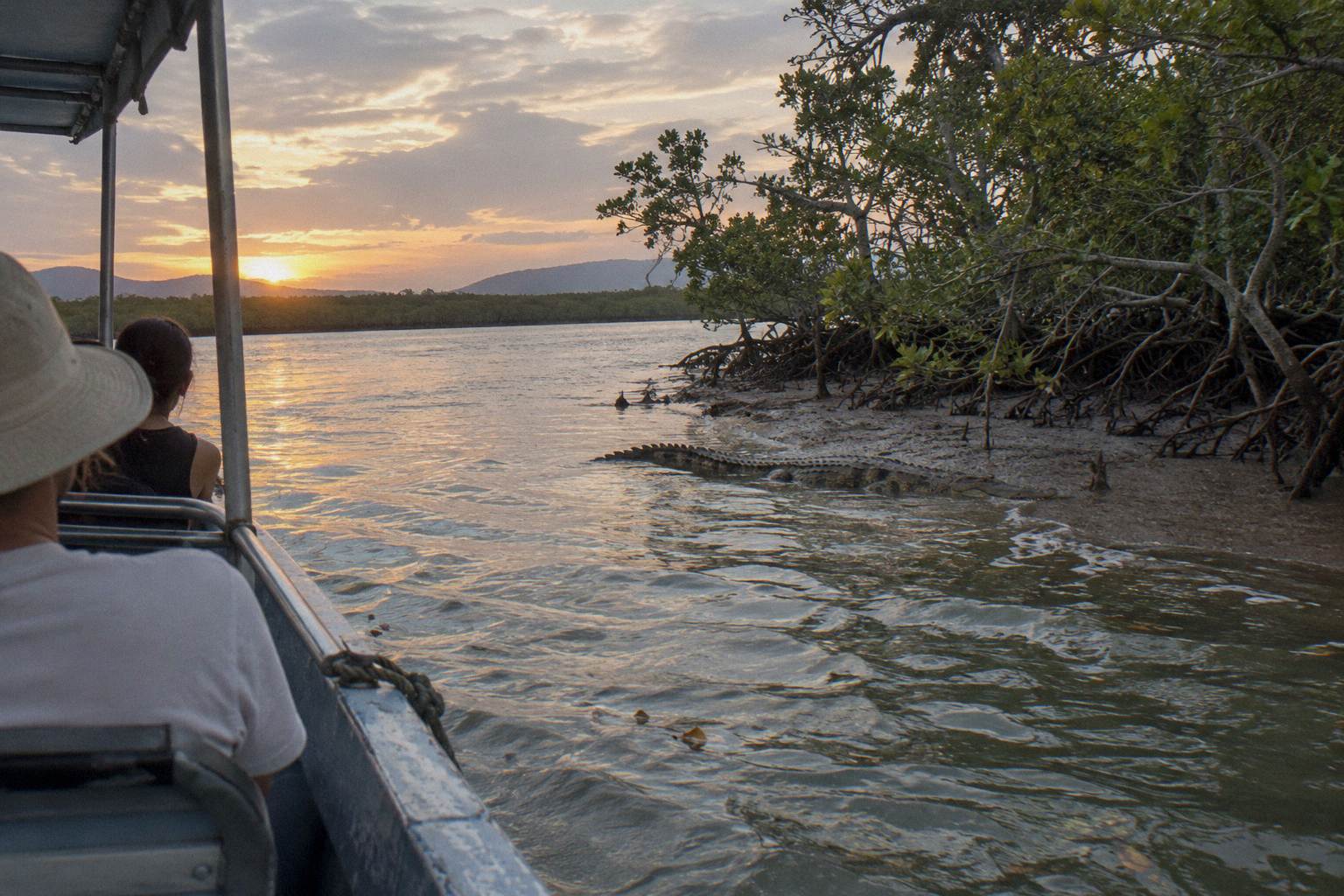
Lady Douglas is the outlier in kind, not just in time. Its 4:30pm to 6:00pm sunset departure is a river cruise through the mangrove channels of Dickson Inlet, several kilometres up the inlet with commentary on mangroves, crocodiles and local history, not an open-water sail. The sun setting behind the hills reads differently from inside mangroves than it does from a catamaran out on the Coral Sea, and the operator says its cruise times depend on seasonal demand. If an open horizon toward the setting sky is what you are after, the sailing trips frame it better.
Which Trip Matches The Sky You Want
Choose by season: from May to August the calculated sunset falls between mid-cruise and the final third of the 5:00pm to 6:30pm sails, while from November to March it comes at or after their 6:30pm return, and Indigo's seasonal departure keeps the sunset inside its two-hour sail. Entry prices are Shaolin at A$71 per person, Lady Douglas at A$48, and the Sailaway catamaran at A$105, with Indigo priced by its live listing, so check that before comparing. All prices are Australian dollars, per person.
The practical frame is what each vessel gives you alongside the sky. The Sailaway sunset sail runs on the catamarans Sailaway IV and Sailaway VI with a maximum of 80 guests, hot and cold canapes and a welcome drink of wine, sparkling wine, beer or soft drink, and more drinks available on board by card. Shaolin, the authentic Chinese junk built in 1969 in Hong Kong as Gloria Maris, carries yum cha style canapes and a beverage, with a bar on board taking EFTPOS or cash, and boards at Crystalbrook Superyacht Marina. Its own sunset route is described on the Shaolin operator's sunset sail page.
Indigo is the small-boat option: the luxury sailing catamaran Indigo 2 takes a maximum of 12 guests, minimum age 10, with a complimentary local cheese and dip platter and BYO drinks welcomed, fridges and glassware on board. Its departure is the one that moves with the seasons, as above, and the sun setting over the Mossman Gorge mountains is how the operator frames the view. For what the evening actually costs, check the live price on the Indigo two-hour sunset sail and compare it against the from-prices above.
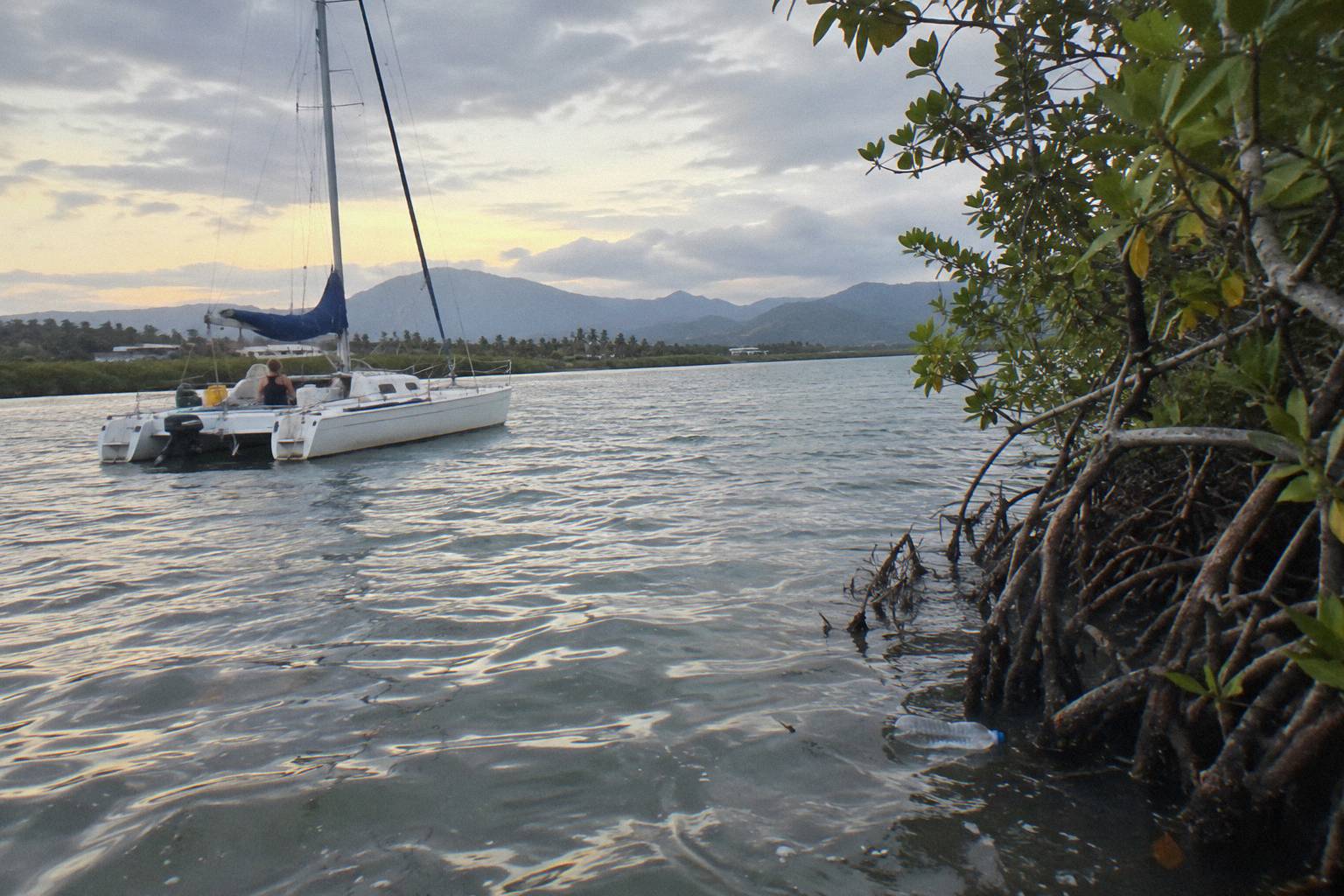
Here is the schedule picture in one table, using each operator's own published times and the calculated sunset range for the months either side of the solstices.
| Trip | Published schedule | Length | Winter sunset at about 5:53pm to 6:09pm | Summer sunset at about 6:29pm to 6:57pm |
|---|---|---|---|---|
| Sailaway catamaran | Check-in 4:30pm, departs 5:00pm, back 6:30pm | 1.5 hours | Sun sets mid-cruise to final third | Sets near or after the end |
| Shaolin junk | Daily, 5pm to 6:30pm, board 15 minutes early | 1.5 hours | Sun sets mid-cruise to final third | Sets near or after the end |
| Lady Douglas sunset departure | 4:30pm to 6:00pm, seasonal demand | 1.5 hours | Sunset near the end of the cruise | Sets near or after the end |
| Indigo 2 | 4:00pm to 4:30pm departure by season | 2 hours | Sunset inside the sail | Sunset inside the sail |
Booking terms are consistent across the Sailaway, Shaolin and Lady Douglas trips: free cancellation up to 24 hours before the start. Indigo's terms are not published the same way, so ask the operator when booking. Start times in every case are chosen on the booking calendar.
Winter And Summer Are Two Different Evenings
Port Douglas winters and summers deliver two very different evenings. From January to March the town averages 395.8 mm to 429.4 mm of rain each month, while July to September see just 23 to 32 mm, so the same calculated sunset meets either humid, cloud-heavy skies or clear dry-season air. Mean maximums of 30.3 °C in January and 24.6 °C in July reinforce the contrast.
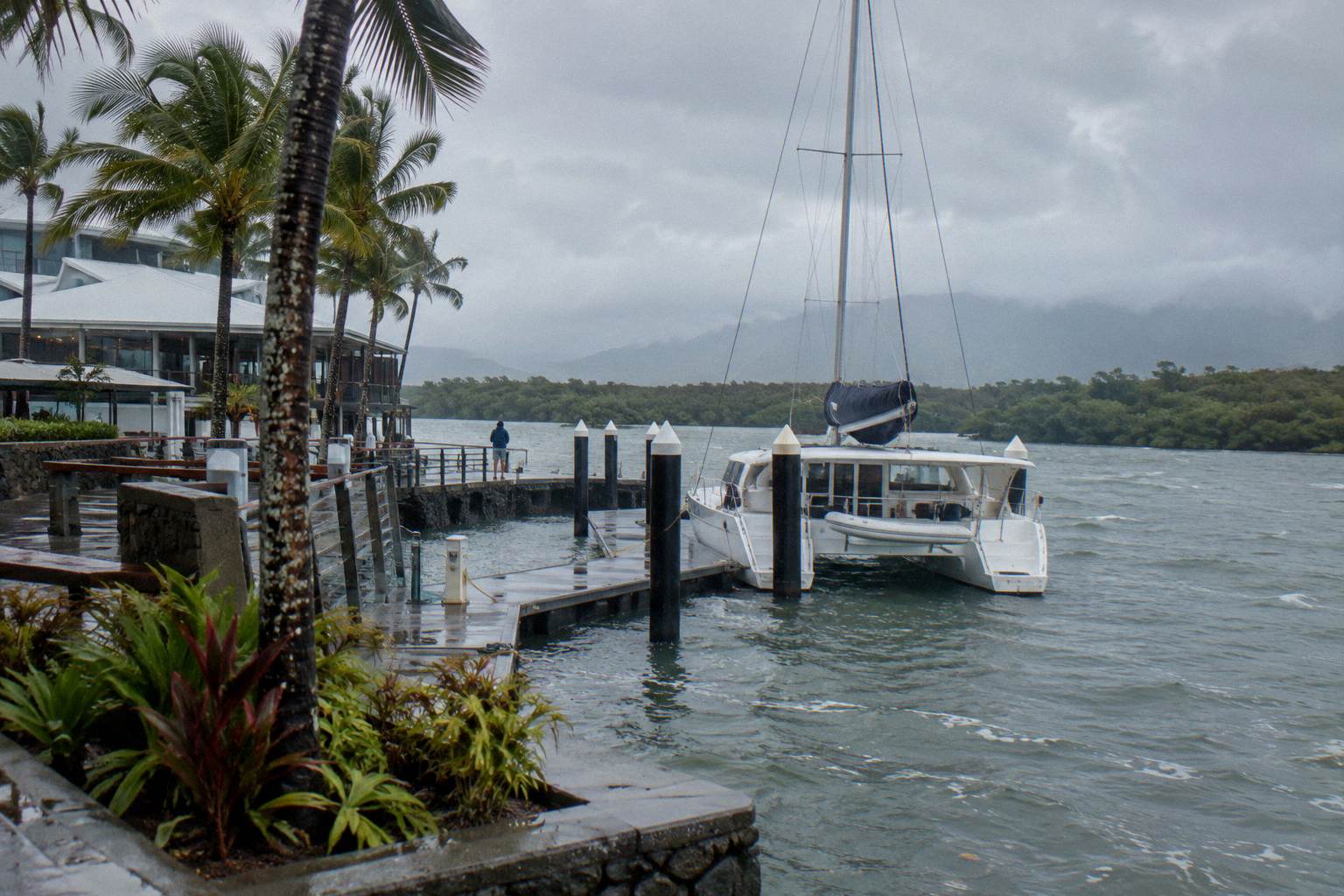
The Bureau of Meteorology climate averages for Port Douglas hold the detail: mean minima run from 16.8 °C in July to 23.7 °C in January, and rain days of a millimetre or more run from 4.0 in August to 14.4 in March. April drops back to 203.3 mm, October sits at 53.1 mm, and the transition between the two regimes is gradual rather than a switch. Annual rainfall averages 2028.4 mm, the overwhelming share of it in the first quarter.
What that means for the evening boats is practical. Showers are common from January to March, and Shaolin reduces numbers on rainy days and hands out umbrellas; its sheltered saloon holds about 12 to 15 seats. Lady Douglas carries covered seating over its entire back deck, which is why the inlet cruise appeals in the wet months. Sailaway's terms count a guest's choice not to sail in wind or rain, when the vessel still operates, as the guest's own cancellation, which inside 24 hours is a 100 percent fee: if the sky looks doubtful, decide early.
| Month | Mean max (C) | Mean min (C) | Mean rain (mm) | Rain days 1 mm+ |
|---|---|---|---|---|
| January | 30.3 | 23.7 | 395.8 | 13.8 |
| March | 29.5 | 22.8 | 429.4 | 14.4 |
| July | 24.6 | 16.8 | 26.4 | 4.2 |
| September | 26.7 | 18.6 | 32.1 | 4.4 |
The seasonal pages go deeper on each half of the year: the dry season evening sail guide covers the July-to-September window, and the wet season evening sail guide works through the January-to-March trade-offs. Neither season promises colour; both promise a different kind of evening.
What The Western Sky Looks Like From Each Route
Every evening route frames the same sunset differently. Shaolin sails from the marina along Dickson Inlet, past the waterfront and out into the Coral Sea with views of the mountains, coastline, islands and Four Mile Beach. Sailaway's page names the Daintree mountains, Indigo's names the Mossman Gorge mountains, and Lady Douglas stays inside the mangrove channels. The Port of Port Douglas itself is a small natural harbour behind Island Point within Dickson Inlet, 56 km north of Cairns.
The geography explains the pictures. The town looks east over the sea, so the sun sets behind the ranges to the west and the colour plays on the water in front of you. A boat out in the Coral Sea gets the widest frame: sea, coastline, islands and the dark line of the ranges all at once. A boat inside Dickson Inlet gets a narrower, closer frame of water, mangroves and hillside, with the sky as the open element above. Neither is the better view; they are different compositions, and knowing which you prefer settles half the decision.
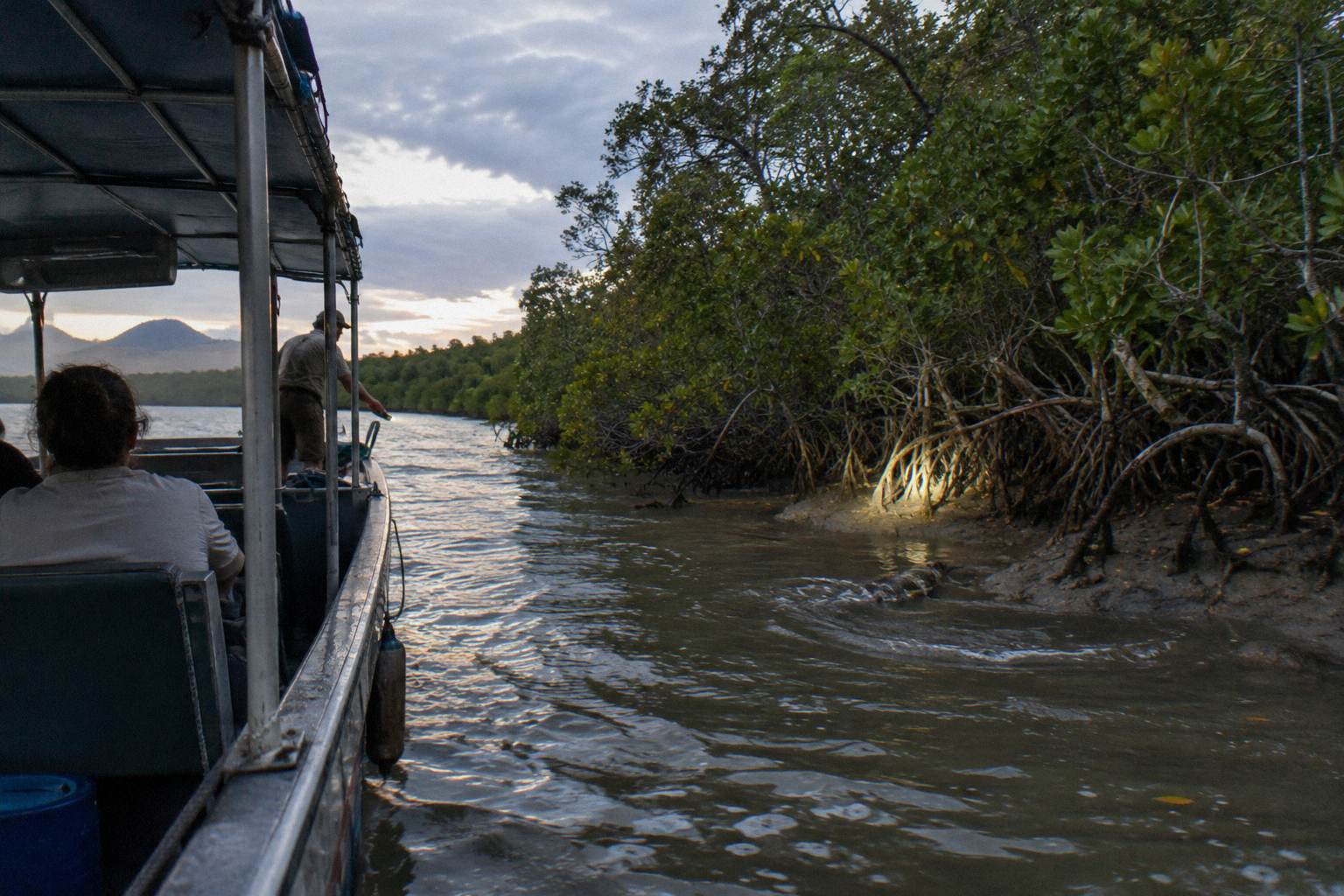
The fixed-schedule question comes back here. From November to March the 5:00pm to 6:30pm trips are on the water while the sun is still climbing down, and the sky at its most colourful can arrive as the boat returns or just after. From May to August that same trip holds the calculated sunset between mid-cruise and the final third. Indigo's seasonally moving departure and two-hour length keep it positioned across both halves of the year. Whether any of it glows is a weather question, and nobody can promise it.
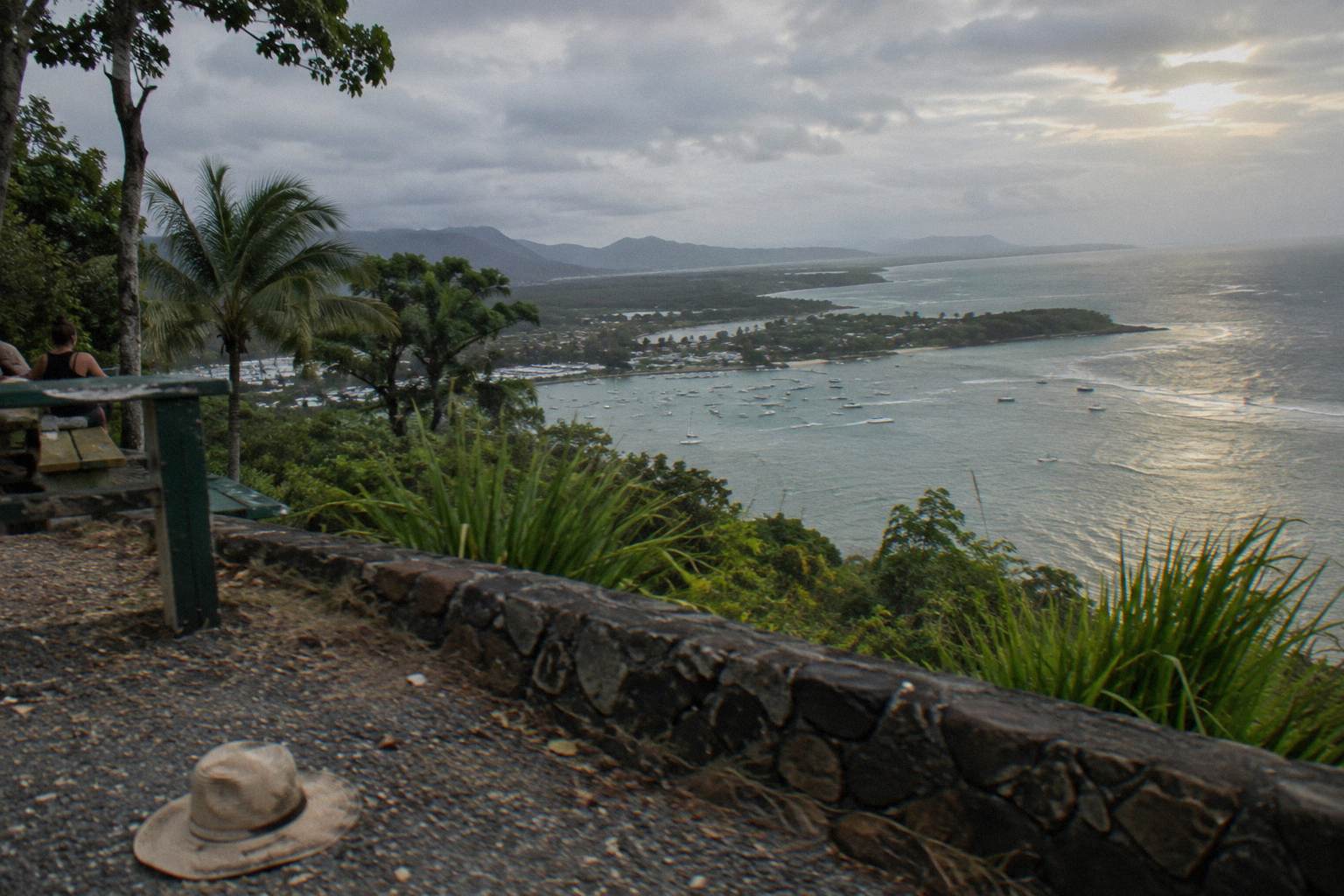
Wildlife is a side benefit only on the inlet route. The Lady Douglas operator lists brahminy kites, ospreys, white-bellied sea eagles, mangrove herons, whimbrels, rainbow bee-eaters, sunbirds and kingfishers around the mangroves, and says crocodiles are normally seen on over 90 percent of its trips, especially in the dry season from May to November: an operator's claim, never a promise. Queensland's Be Crocwise guidance, published by the state government, is blunt that no waterway in crocodile range is crocodile free, which is a reason to keep arms and legs inside the boat and none at all to expect a show.
Mistakes To Avoid When Chasing The Sunset
The recurring mistakes are simple ones: booking a fixed 5pm trip in December and expecting the sun to set on board, treating a calculated sunset time as a boat time, expecting hotel pickup when every trip boards at Crystalbrook Superyacht Marina, and planning a same-evening drive back to Cairns when the last shared southbound bus leaves Port Douglas around 5pm to 6pm. Each is avoidable with one piece of planning, and none costs anything to fix in advance.
The first mistake is the calendar one, and the table above solves it: in the November-to-March window, either accept the afterglow on a 5pm trip or choose a boat whose schedule moves with the season. The second is mistaking the NOAA calculation for an operator's timetable; the exact start is chosen on the booking calendar and each time in the tables belongs to the operator that publishes it. The third is transport: there is no hotel pickup for any trip, all boarding is at the marina on Wharf Street, Shaolin sits at Crystalbrook Superyacht Marina, and Sailaway checks in at its Boathouse office. The marina boarding guide covers the layout.
The fourth mistake is the return journey. A cruise ending about 6:30pm finishes after the last shared bus south toward Cairns, so guests staying outside Port Douglas need a pre-booked evening transfer or a rideshare, and the practical advice is to stay in town or book a late transfer before you sail. The fifth is gear: Sailaway suggests sunglasses and a light jumper because it is breezy, plus a Visa or Mastercard for on-board purchases; Shaolin suggests a hat, a camera and sunscreen. No dress code is published, and none is needed.
The last mistake is expecting a colour guarantee. Sunset colour depends entirely on the weather, no operator publishes a weather-cancellation guarantee, and the right question to ask when booking is how the operator handles a cancelled departure. Free cancellation up to 24 hours before the start applies to the Sailaway, Shaolin and Lady Douglas trips, which is the buffer that makes an evening bet on the sky a reasonable one. Port Douglas Sunset Cruises keeps the current prices, schedules and booking links for every evening boat in one place, so the comparison takes minutes rather than an afternoon of tabs.
Common Questions About Sunsets Over Port Douglas
Can You See The Sunset In Port Douglas?
Yes, every evening of the year. Calculated sunset times for the marina run from about 5:53pm in mid-June to about 6:57pm in mid-January. The sun drops behind the western ranges and the colour spreads across the sea and sky in front of the town, and the evening boats are on the water for most or all of that window depending on the month.
What Time Is Sunset In Port Douglas?
By calculation for the marina, the sun sets at about 6:57pm in mid-January, about 5:53pm in mid-June, and between those points across the year, for example about 6:11pm in mid-April and about 6:29pm in mid-November. Treat the figures as a calculation for the 15th of each month, not an official timetable.
Can You Watch The Sun Set From A Boat In Port Douglas?
It depends on the month and the boat. From May to August the sun sets between mid-cruise and the final third of the 5:00pm to 6:30pm trips run by Sailaway and Shaolin. From November to March it sets near or after those trips end, while Indigo's seasonally shifting departure keeps the sunset inside its two-hour sail.
Does Port Douglas Have Good Sunsets In The Wet Season?
The sun still sets on schedule from January to March, at about 6:34pm to about 6:57pm, but those months average 395.8 mm to 429.4 mm of rain each and showers are common, so colour is a matter of luck on the day. Shaolin reduces numbers on rainy days and hands out umbrellas, and Lady Douglas has covered seating over its entire back deck.
Which Sunset Boat Is The Cheapest In Port Douglas?
All prices are in Australian dollars, per person. The Lady Douglas inlet cruise with its sunset departure is from A$48, the Shaolin Chinese junk evening sail is from A$71, and the Sailaway catamaran sunset sail is from A$105. The Indigo two-hour sail's price sits with the live listing, so check it before comparing.
Do The Sunset Boats Get Cancelled For Weather?
No operator publishes a weather-cancellation guarantee, so ask the operator how it handles a cancelled departure. Note that Sailaway counts a guest's choice not to go in wind or rain, when the vessel still operates, as the guest's own cancellation, which inside 24 hours carries a 100 percent fee. Free cancellation up to 24 hours before the start applies to the Sailaway, Shaolin and Lady Douglas trips.